
The Shell Inside Amber
Find a ridge that survives the light
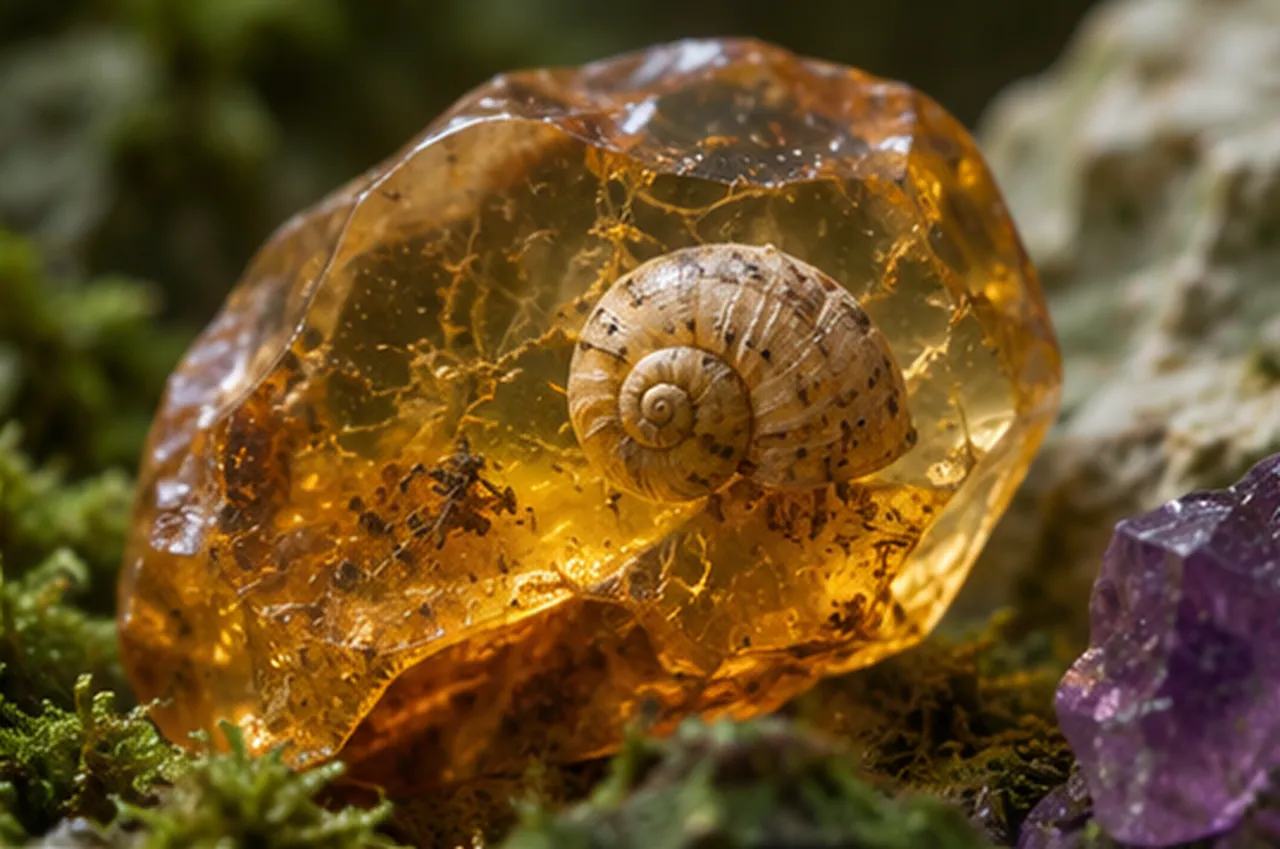
At the start of this prototype, a shell the color of wet paper lies in a block of amber. You can turn the support a little and carry the lamp through a shallow arc. A reflection can hide the entire lip during part of the turn. Keep track of one dark curve that lines up with an exterior scratch. Use that curve to return to a useful angle once a bright patch slides across.
Choose the first window
The initial opening can be made on either side of the curl. Starting near the thick rear wall reveals more about the shell’s angle. Starting at the wide mouth shows a pale line that looks like a thicker wall until the lamp moves. Each choice leaves a different edge around the inspection window, which becomes the landmark you use for the next action. There is time to turn the work after making an opening.
Preserve three fragile ribs
The lower shell has three parallel ribs and a nearly transparent edge beyond them. An opening aimed between the inner two ribs can make the outer one difficult to see. You can leave a narrow band of resin there and inspect it from the opposite side. Marking the Weak Ribs describes how a quiet paired mark can follow that edge without becoming a command. At the end you should still be able to tell how the ribs join.
Work with an uncertain outline
Some pieces arrive with an opaque band between the outside and the curl. A lamp behind the block gives you an incomplete silhouette. You can record that partial outline, then carry it through the next rotation and notice where it splits around a clear region. Later scenes use a larger cloud that remains persuasive from one misleading angle. The Cloud in the Resin shows how a fixed edge nearby keeps that observation grounded.
A different measure of finishing
Finishing can leave large parts of the shell sheltered. The result view shows the object from the position where you first saw it and from the nearest angle you reached. Compare the curves between the two. If one looks broken, return to the earlier view and check whether that edge had been hidden or actually changed. The surviving shape is more interesting than the volume of clear material you removed.
Color against the quarry
The level begins in cool green surroundings. A piece close to the lamp carries a warm rim and a dry pale center. In the interior the shell picks up a little of the resin color but its thinnest ridges keep a cooler edge. At the back, violet pencil marks distinguish the block’s support from a feature inside the object. The project aims for a small number of surfaces with readable roles.
Where the prototype stands
The playable idea concerns one block at a time. Each experiment gives the player a different location for the first useful glimpse. The Resin Lab is comparing the information in the first angle with the number of times people need to return to it. Later scenes may transfer a known shell to a new section of stone so that the player can test something learned before. Excavation Cases follows the current order through the opening, the weak margin, and a final readable view of the surviving shell.